 English
 русский
News
Home / News / Industry News / Casting CNC Machining Guide: Process, Tolerances, Cost, and Supplier Selection

 English
 Search
Suzhou Heimat Precision Machinery Co., Ltd.
+86-18118122885
joy.qian@szhengmai.com
A pump housing has to resist internal pressure, seal against a cover plate, and pilot onto a motor shaft with a clearance of a few hundredths of a millimetre. If machined entirely from solid, the part would waste hours of spindle time removing material that becomes scrap. If used as a raw casting, the bore and cover face would never meet the seal requirement. Casting CNC machining handles both constraints: the casting supplies the complex envelope, the CNC pass delivers the precise functional surfaces. This article explains the combination, when it makes sense, and how to source it responsibly.
Casting and CNC machining are not rival processes. They are complementary steps in one production flow. The casting stage forms the near-net geometry. Molten metal is poured into a mold and solidifies into the overall shape, including ribs, bosses, internal cavities, and curved contours. The CNC stage then finishes the functional surfaces. Milling, turning, drilling, and tapping create accurate bores, flat mating faces, threaded holes, and locating features that casting alone cannot hold.
For parts with internal passages, curved housings, or multiple structural bosses, machining from solid is expensive in both time and material. The tool must remove most of the block, turning valuable stock into low-value chips. Casting already forms those shapes, so the CNC tool only removes the machining allowance left on the surfaces that need precision.
For those parts, a custom casting precision part provides the starting geometry that a machining centre can finish in a predictable number of passes.
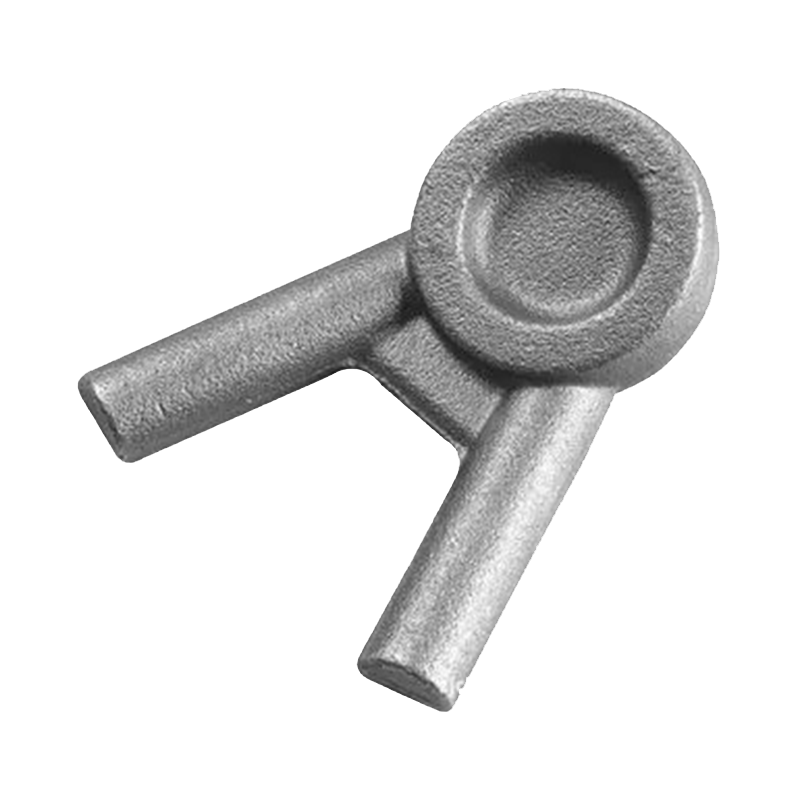 Custom Casting Precision Parts for Complex GeometriesThis custom casting process provides near-net geometry for complex components, enabling efficient CNC finishing. It offers close tolerances and enhanced material properties, making it suitable for parts that are difficult to machine from solid stock.View Product →
Engineers often ask whether to use casting or CNC machining. The more useful question is whether the part needs casting near-net geometry, CNC finishing on critical faces, or both. The table below shows the general decision boundaries based on volume, tolerance, and complexity.
| Decision Factor | Pure CNC from Solid | Pure Casting | Casting + CNC Machining |
|---|---|---|---|
| Annual volume | 1 to 100 pieces | 1,000 pieces and up | 200 to 10,000 pieces |
| Dimensional accuracy | ±0.005 to ±0.01 mm | IT12 to IT14 | ±0.02 to ±0.05 mm on machined faces |
| Surface finish | Ra 0.8 to 1.6 μm | Ra 6.3 to 12.5 μm | Ra 0.8 to 1.6 μm on machined faces |
| Tooling investment | None | Mold required | Mold and machining fixtures required |
| Part complexity | Simple to moderate | Very high | Very high |
The sweet spot for the combined workflow is a component with complex geometry, a production quantity high enough to amortize the mold cost, and functional surfaces that require tolerances and finishes the casting process cannot produce. A cast housing destined for an automated production line is a typical candidate, and automation equipment customized CNC parts often follow this exact route from mold to finished component.
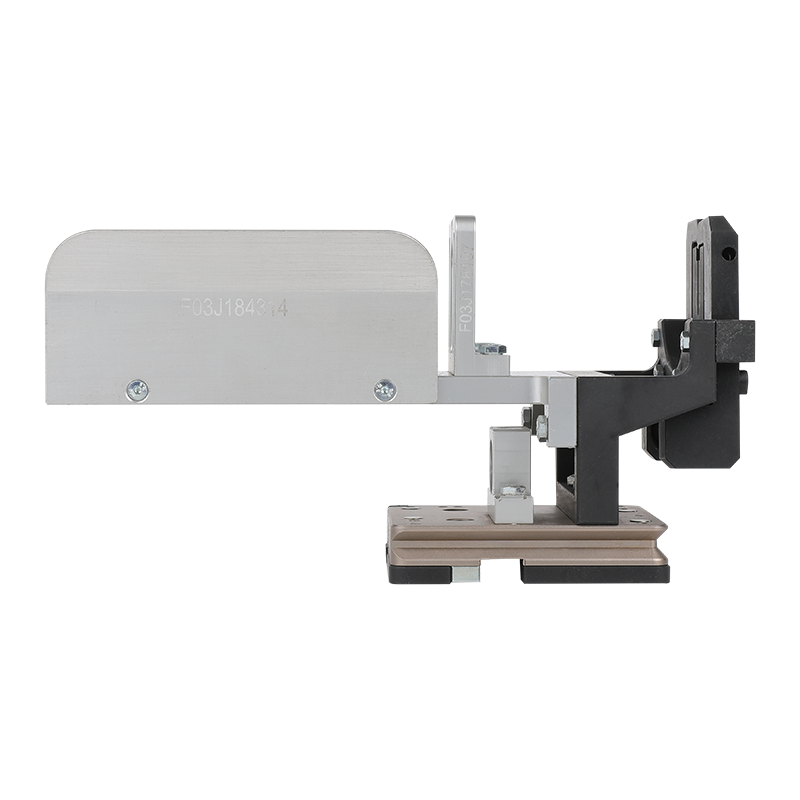
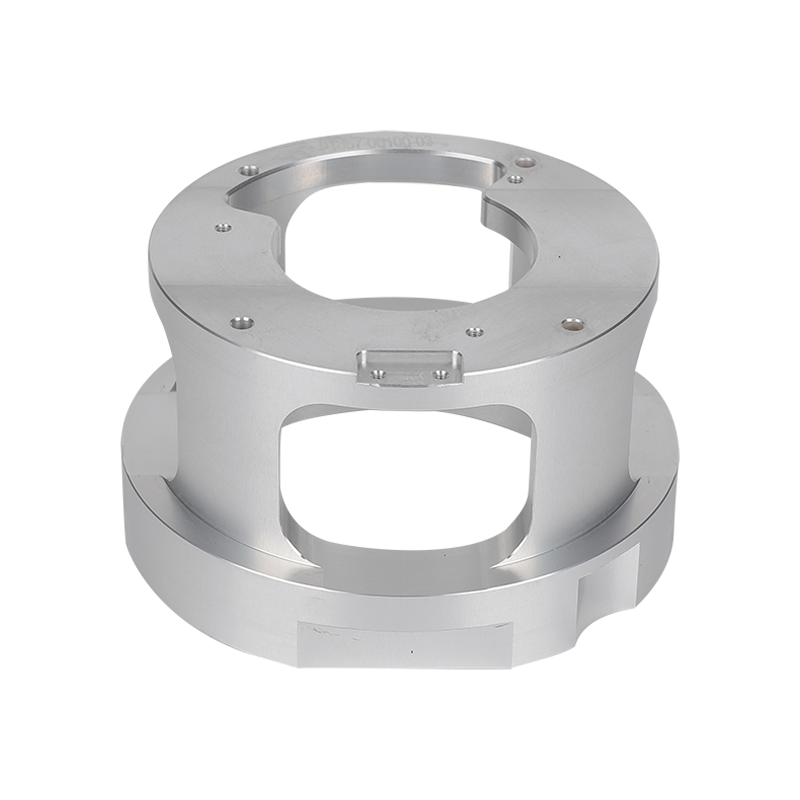 Automation Equipment Customized CNC Machined PartsThese customized CNC parts are milled to precise dimensions for production line equipment and robotic arms. They are ideal for components requiring tight tolerances and reliable performance in automated systems.View Product →
Every casting starts with inherent variability. The mold might shift, the metal might shrink unevenly, and draft angles are part of the design. A competent supplier handles this by adding machining allowance to the surfaces that need precision, then machining datum features first to establish a stable reference frame.
The practical implication is that the tolerance callout on a drawing must apply to the appropriate surface. What tolerances CNC machining actually holds is a useful reference when setting drawing requirements. It is not necessary to request a tight tolerance on a surface that will remain as-cast, because it will never meet that condition and the inspection result will fail.
Not every alloy is suitable for both casting and CNC machining. The material must flow through the mold and solidify with predictable shrinkage, and then behave well under cutting tools without excessive tool wear or chip issues.
The drawing should clearly separate casting surfaces from machined surfaces, with a machining allowance of 1 to 3 mm on the faces that will later be cut. Since casting distortion during cooling is part of the process, the allowance must be sized to cover the expected deviation.
The risky part of the workflow is the interface between the foundry and the machine shop. When those are separate companies, each has a legitimate reason to blame the other for a dimensional problem. A supplier that runs both operations under one roof takes ownership of that interface and responds faster when issues arise.
The combined workflow has two cost layers: the one-time tooling investment and the recurring per-piece cost. The mold is the main reason the break-even point matters. Its cost can range from several thousand to tens of thousands of RMB depending on part size, casting process, and cavity count.
| Quantity | Pure CNC Machining | Casting + CNC Machining |
|---|---|---|
| 1 to 50 pieces | Lowest cost, fastest lead time | Mold cost not justified |
| 100 to 300 pieces | Still competitive | Break-even range begins |
| 500 pieces and above | Material waste dominates cost | Mold paid off, per-piece cost falls |
| 5,000 pieces and above | Generally not competitive | Lowest per-piece cost |
Lead time also shifts. Mold fabrication plus sample approval typically adds two to four weeks to the overall schedule. For a production run, that is acceptable. For an urgent prototype need, machining from solid is the correct choice.
Casting CNC machining is not a universal solution; it solves a specific class of problems. When geometry is simple and volumes are low, machining from solid is the direct route. When volume is huge and tolerances are loose, a bare casting may be enough. The hybrid workflow earns its place when complexity, volume, and precision requirements overlap.
A capable partner will perform a DFM review, suggest the right casting process, machine the critical features, and inspect the results against the drawing. That approach delivers parts that fit in the field and hold tight where they matter. For engineers evaluating this route, the conversation should begin with a drawing review rather than a price comparison.
If your project fits this profile, speak with a machining and casting team that can take the part from casting tooling to finished, inspected components. Contact our engineering team for a DFM review and a realistic quote.
If you have any questions, please fill out the contact form at the bottom of the page and contact us.
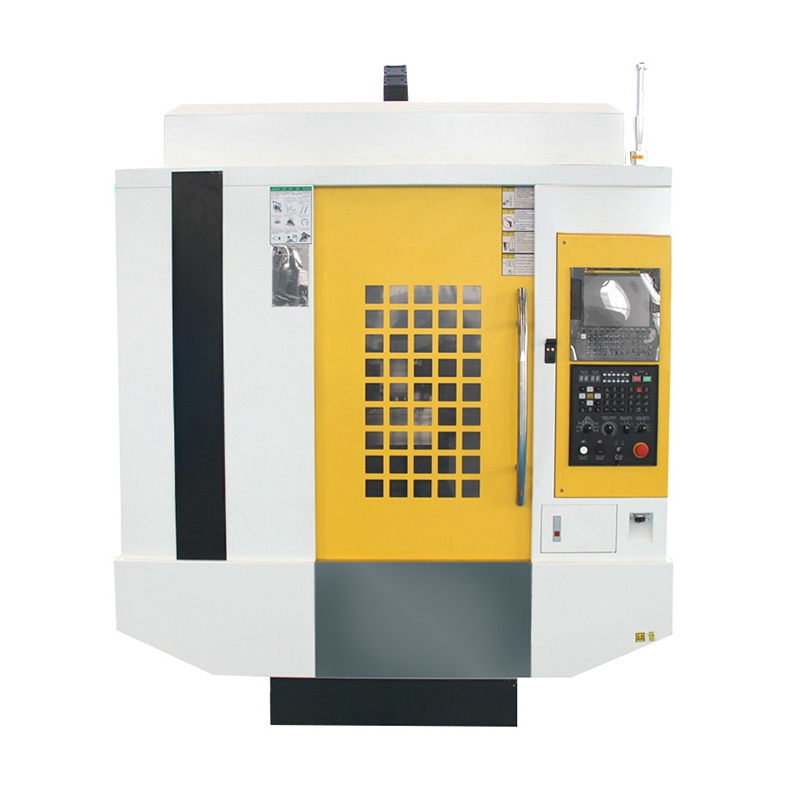 CNC Drilling and Tapping Machin
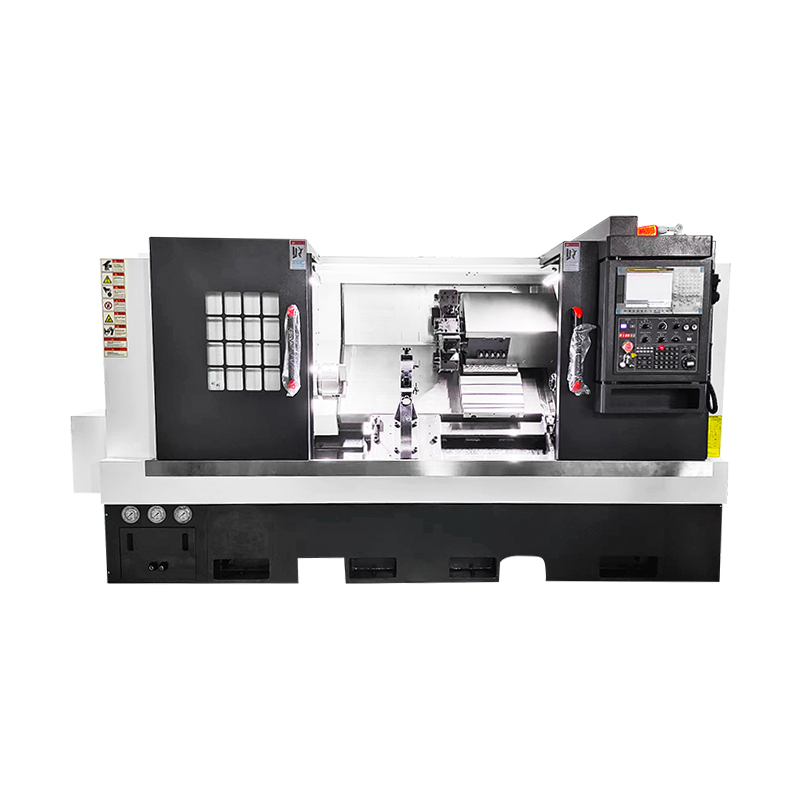 CNC Lathe Machine
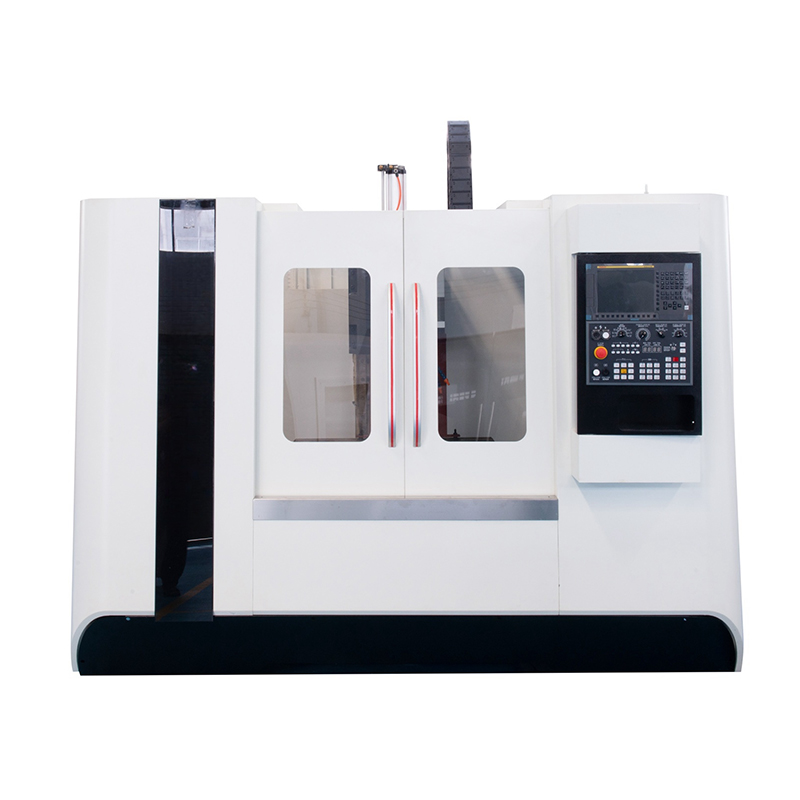 CNC Machine
 Cutomized Die-Cutting Products for Electronics Industry
 New Energy Automation Die Cutting Products
 Customeized Die-Cut Products in Package Industry
 Bespoke Touch Screen for Gaming and Entertainment Devices
 Custom Touch Screen in Smart Home Industry
 Customized Personalized Touch Panel Screen
 Design Manufacturing and Assembly of Special Customized Custom Electrical Cabinet
 Industrial Robot Automatic Production Line Design Manufacture and Assembly
 Customized Design Automation Equipment

+86-18118122885

+86-512-66233336

joy.qian@szhengmai.com

No. 8, Guangdian Road, Guangfu Town, Wuzhong District, Suzhou, Jiangsu, China.
Copyright © 2023 Suzhou Heimat Precision Machinery Co., Ltd. All Rights Reserved.Custom CNC Parts Processing Manufacturers

|
