 English
 русский
News
Home / News / Industry News / What Tolerances Can CNC Machining Actually Hold, and Why Does It Matter for Your Parts?

 English
 Search
Suzhou Heimat Precision Machinery Co., Ltd.
+86-18118122885
joy.qian@szhengmai.com
When an engineer specifies a tolerance on a drawing, the number usually comes from one of two places: a genuine functional requirement calculated from how the part must fit and perform, or a default carried over from a previous drawing that nobody questioned. The difference matters enormously — not because tight tolerances are hard to hold, but because they cost significantly more to hold, and paying for precision you do not need is a waste that compounds across every part in a production run.
Understanding what CNC machining can realistically achieve, what drives the cost of tighter tolerances, and how to match your tolerance specifications to your actual functional requirements is one of the most practical things a product engineer or procurement manager can do to improve both part quality and total production cost.
A tolerance is the permitted range of variation around a target dimension. A shaft specified as 20.00mm ±0.05mm can measure anywhere from 19.95mm to 20.05mm and still pass inspection — a total band of 0.10mm. Any part outside that band is non-conforming.
Tolerances appear on drawings in several forms. Bilateral tolerances (±0.05mm) allow equal deviation in both directions. Unilateral tolerances (+0.00/−0.10mm) allow deviation in one direction only — used when a shaft must not exceed a maximum diameter for clearance fit reasons, for example. Limit tolerances state the upper and lower acceptable values directly (19.90/20.00mm). And title block general tolerances — typically ±0.1mm or ±0.2mm — apply to every dimension that is not individually toleranced on the drawing.
For most parts, the majority of dimensions should carry general tolerances. Only the features that directly control fit, function, or assembly — bearing seats, mating bores, sealing surfaces, locating pins, and holes — justify the cost of individually specified tight tolerances.
A well-maintained CNC machining center or CNC lathe operated in a temperature-controlled environment, running standard tooling and fixturing, can achieve the following without special processes:
| Feature Type | Routine Tolerance | With Careful Process Control |
|---|---|---|
| General linear dimension (milled) | ±0.05mm | ±0.02mm |
| Turned diameter | ±0.02mm | ±0.01mm |
| Drilled hole diameter | ±0.1mm | ±0.05mm |
| Reamed hole diameter | ±0.015mm | ±0.008mm |
| Milled flat surface roughness | Ra 1.6 μm | Ra 0.8 μm |
| Turned surface roughness | Ra 0.8 μm | Ra 0.4 μm |
These figures represent what a competent shop can achieve consistently across a production batch — not what is achievable on a single carefully-made prototype with full attention. Consistency across a production run is what actually matters for parts that go into assemblies.
The ISO system classifies tolerance tightness into standardized grades called IT grades (International Tolerance), numbered from IT01 (the most precise, used in master gauge manufacture) through IT18 (rough structural applications). For CNC-machined parts, the practical range is IT5 through IT11.
| IT Grade | Approximate Tolerance at 25mm | How It Is Achieved | Where It Is Used |
|---|---|---|---|
| IT5 | ±0.006mm | Precision grinding or honing | Precision bearing seats, high-speed spindles |
| IT6 | ±0.008mm | Precision CNC + grinding | Medical device parts, hydraulic bores, precision shafts |
| IT7 | ±0.012mm | High-quality CNC machining | Precision mating features, gears, and precision housings |
| IT8 | ±0.018mm | Standard CNC machining | General engineering fits, automation components |
| IT9–IT10 | ±0.030–0.046mm | Standard CNC | Non-mating precision features, mounting surfaces |
| IT11 | ±0.075mm | Conventional machining | Sheet metal, structural features, clearance dimensions |
The tolerance value for each IT grade scales with the nominal dimension — IT7 on a 10mm shaft is ±0.007mm; IT7 on a 100mm bore is ±0.018mm. The full tables are defined in ISO 286-1 and cover dimensions from 1mm to 3,150mm.
Standard CNC turning and milling can achieve IT7–IT8 on most features. Going tighter than that — into IT5–IT6 on shaft or bore diameters — requires additional operations that add high cost and lead time:
Cylindrical grinding is used for external diameter tolerances of ±0.003–0.008mm (IT5–IT6). The part is rough-turned on the CNC lathe, then transferred to a cylindrical grinding machine for a final abrasive finishing pass that removes very small amounts of material with high geometric precision. Grinding requires dedicated equipment and an extended cycle time compared to turning.
Reaming achieves ±0.008–0.015mm on bore diameters using a multi-edged rotary cutting tool that follows an existing drilled or bored hole and removes a precise amount of material in a single pass. Reaming is faster and less expensive than internal grinding for moderate bore precision requirements and is the standard method for precision hole diameters in the IT6–IT7 range.
Honing uses abrasive stones in a reciprocating and rotating motion inside a bore to achieve ±0.003–0.008mm diameter tolerance with exceptional surface finish (Ra 0.2–0.4 μm). It is the standard process for hydraulic cylinder bores, engine cylinder bores, and any bore where both dimensional precision and low surface roughness are required simultaneously.
The relationship between tolerance tightness and cost is not linear — it escalates rapidly below a certain threshold. Moving from ±0.1mm to ±0.05mm on a turned diameter adds minimal cost: the machine can achieve this with standard operation. Moving from ±0.05mm to ±0.01mm requires slower cutting speeds, more inspection passes, and possibly 100% dimensional measurement instead of sampling — perhaps a 30–50% cost increase for that feature. Moving from ±0.01mm to ±0.003mm requires grinding operations, precision fixturing, temperature-controlled inspection, and calibrated gauging — potentially a 200–400% cost increase for that single diameter dimension.
The practical implication is straightforward: for every tight tolerance on a drawing, ask whether the function of the part genuinely requires that precision. In most parts, the features that truly need tight control are a small fraction of the total dimensions. Applying ±0.01mm to every dimension on a drawing because it "seems precise" increases cost dramatically for no functional benefit. Identifying the three or four dimensions that actually control fit and performance, specifying tight tolerances on those, and leaving everything else at general tolerance (±0.1mm or ±0.2mm) produces a part that performs identically to a tightly-toleranced version at a fraction of the cost.
A dimension tolerance controls how big or small a feature is. It does not control its shape. A shaft diameter that measures correctly at every cross-section might still be bent along its length, or oval rather than round at a given cross-section — both of which would cause problems in a bearing seat despite passing a diameter check.
GD&T (Geometric Dimensioning and Tolerancing, per ISO 1101) provides additional controls for shape, orientation, and position:
For buyers without deep GD&T experience, the practical guidance is to identify the features on your part that must align with mating components and ask your machining supplier whether position tolerances on those features would be more effective than relying on individual dimension tolerances alone. A competent CNC machining supplier can advise on GD&T specification as part of the design-for-manufacturing review process.
The most productive tolerance conversation with a CNC machining supplier starts before the drawing is finalized. Key questions to raise:
A supplier who engages substantively with these questions — who can tell you which tolerances are expensive to hold and suggest alternatives — is a supplier who understands their own process capability and will deliver consistent results across a production run.
Suzhou Heimat Precision Machinery Co., Ltd. provides CNC precision machining for automation equipment, medical devices, aerospace, and energy industry components. Standard tolerance capability of ±0.01mm on critical features; IT6–IT7 bore and shaft tolerances available with in-house grinding and reaming operations. CMM inspection with full dimensional reporting. Material traceability documentation and first-article inspection are available on request.
Send us your drawing and tolerance requirements to discuss process capability and get a quotation.
Related Products: CNC Machining Precision Parts | Automation Equipment Parts | Medical Equipment Parts | Aerospace Equipment Parts
If you have any questions, please fill out the contact form at the bottom of the page and contact us.
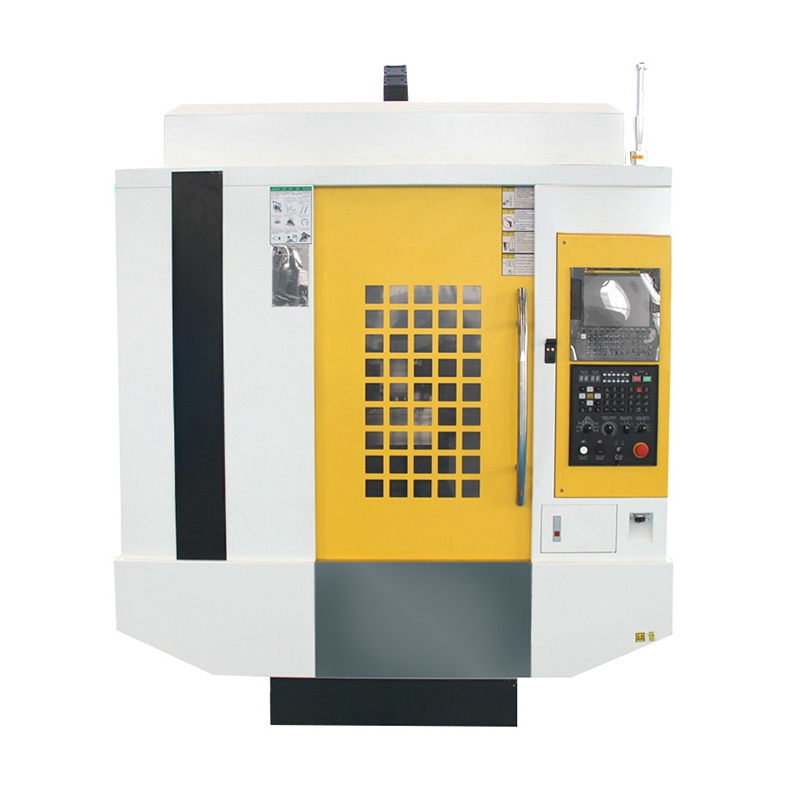 CNC Drilling and Tapping Machin
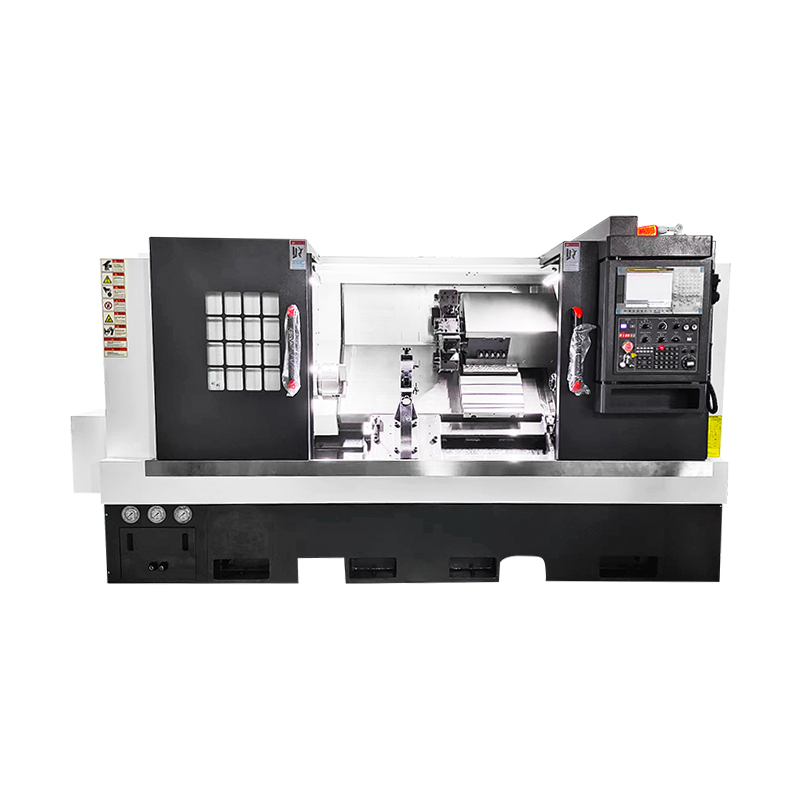 CNC Lathe Machine
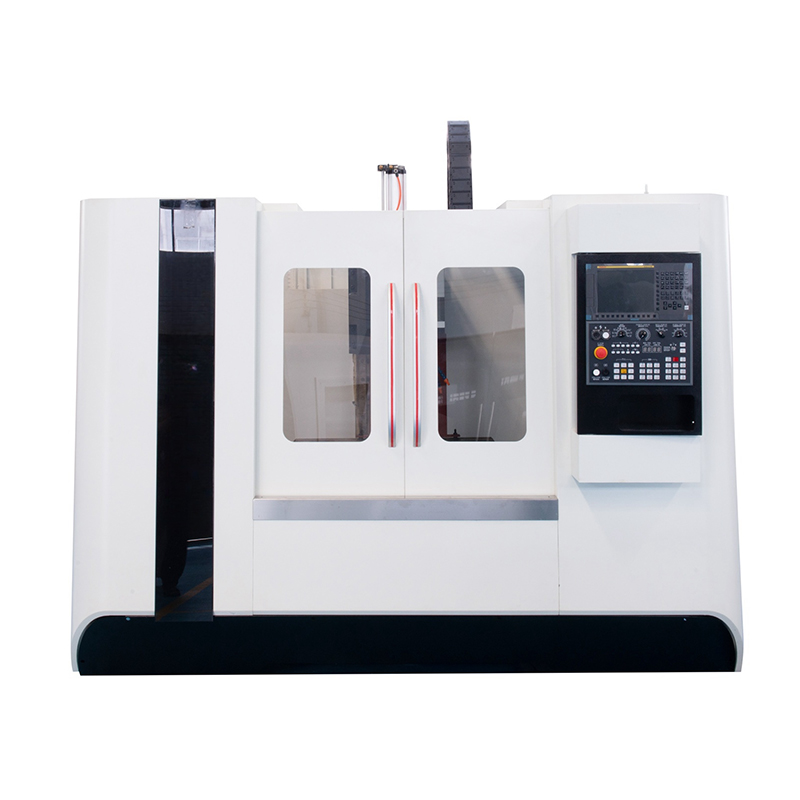 CNC Machine
 Cutomized Die-Cutting Products for Electronics Industry
 New Energy Automation Die Cutting Products
 Customeized Die-Cut Products in Package Industry
 Bespoke Touch Screen for Gaming and Entertainment Devices
 Custom Touch Screen in Smart Home Industry
 Customized Personalized Touch Panel Screen
 Design Manufacturing and Assembly of Special Customized Custom Electrical Cabinet
 Industrial Robot Automatic Production Line Design Manufacture and Assembly
 Customized Design Automation Equipment

+86-18118122885

+86-512-66233336

joy.qian@szhengmai.com

No. 8, Guangdian Road, Guangfu Town, Wuzhong District, Suzhou, Jiangsu, China.
Copyright © 2023 Suzhou Heimat Precision Machinery Co., Ltd. All Rights Reserved.Custom CNC Parts Processing Manufacturers

|
 Previous