English
 русский
News
Customized CNC processing is the most adaptable, high-precision, and efficient mechanical processing method for non-standard parts, special structural components, and small-batch complex products in modern industry. It breaks the limitations of traditional processing equipment and processes, realizes the one-stop forming processing of complex three-dimensional structures, high-hardness materials, and high-precision dimensional requirements, and directly solves the core pain points of difficult processing, low precision, and long cycle of customized parts. More than 85% of industrial customized parts rely on CNC processing to achieve mass production and functional verification, and it has become an irreplaceable core link in the manufacturing industry, from aerospace to electronic equipment, from medical devices to automotive accessories.
The core value of customized CNC processing lies in personalized design matching, high-precision dimensional control, and flexible production adjustment. Unlike standardized processing, it takes the actual needs of customers as the core, formulates exclusive processing procedures, selects matching tools and materials, and optimizes processing paths to ensure that the final parts fully meet the design drawings and application scenarios. Whether it is a single prototype or small-batch customized production, it can maintain stable precision and consistent quality, which is the key advantage that traditional processing cannot match.
Definition and Core Characteristics of Customized CNC Processing
Basic Definition of Customized CNC Processing
Customized CNC processing is a personalized mechanical processing technology based on a computer numerical control (CNC) system. It inputs the customized part design drawings into the CNC equipment in the form of digital programs, and controls the multi-axis linkage of the tool through the computer to automatically complete the cutting, milling, drilling, tapping, and other processing of raw materials, and finally obtains parts that fully meet the personalized needs. This processing method does not rely on fixed molds or jigs, and can quickly adjust processing parameters and paths according to different part structures, materials, and precision requirements, truly realizing "one part, one program, one solution".
Different from traditional manual processing and semi-automatic processing, customized CNC processing completely gets rid of the dependence on workers' operating experience. The digital control system ensures the stability and repeatability of processing, and even complex, special-shaped parts can be processed with high consistency. This is the fundamental reason why it is widely used in customized parts processing.
Core Characteristics of Customized CNC Processing
Customized CNC processing has four core characteristics that distinguish it from other processing methods, which are also the key to its wide application in industrial customization:
- High precision: The dimensional accuracy can reach 0.001mm-0.01mm, which meets the ultra-precision requirements of customized parts for special equipment, far exceeding the precision level of traditional processing.
- Strong adaptability: It can process almost all common industrial materials, including metal materials such as aluminum alloy, stainless steel, copper, titanium alloy, and non-metal materials such as plastic, nylon, and PEEK, and is compatible with various complex three-dimensional structures.
- Flexible production: It supports single-piece proofing, small-batch and medium-batch customized production, and can quickly adjust processing plans without replacing large-scale molds, shortening the production cycle by more than 60%.
- High degree of automation: After the program is set, the equipment can run continuously for a long time, reducing manual intervention, reducing labor costs, and improving the stability of processing quality.
These characteristics complement each other, making customized CNC processing not only meet the personalized needs of parts, but also ensure the reliability and practicability of the parts, and become the preferred processing method for customized parts in various industries.
Common Equipment and Technical Categories in Customized CNC Processing
Main CNC Equipment for Customized Processing
The realization of customized CNC processing depends on professional CNC equipment, and different equipment corresponds to different part structures and processing requirements. The selection of matching equipment is the primary premise to ensure the quality of customized processing. The following are the most commonly used pieces of equipment in customized CNC processing:
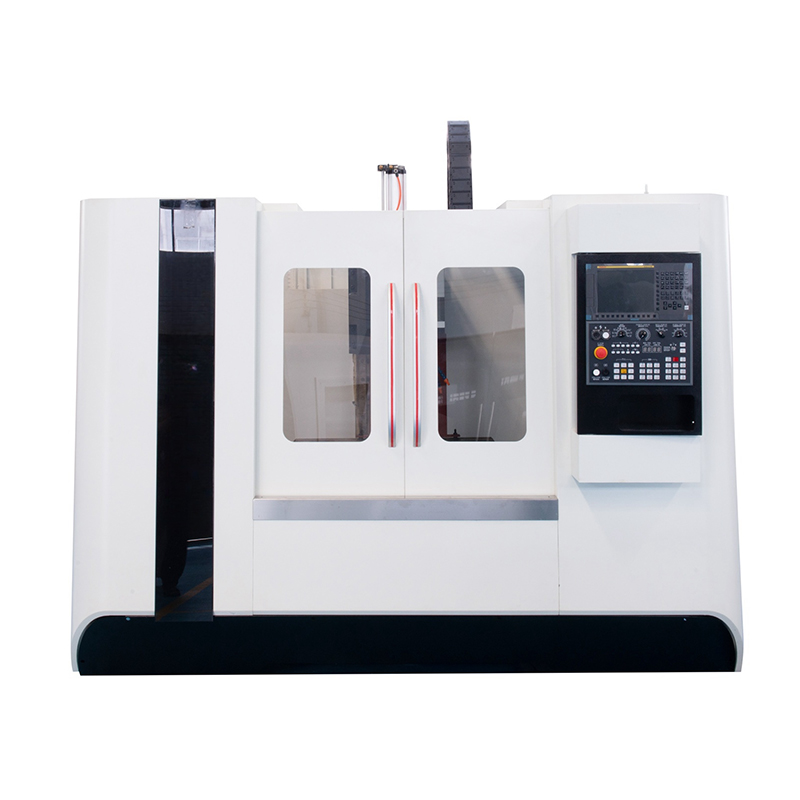
- CNC milling machine: The most widely used equipment, suitable for processing plane, groove, gear, and complex three-dimensional curved surface parts, covering most of the customized metal and non-metal parts.
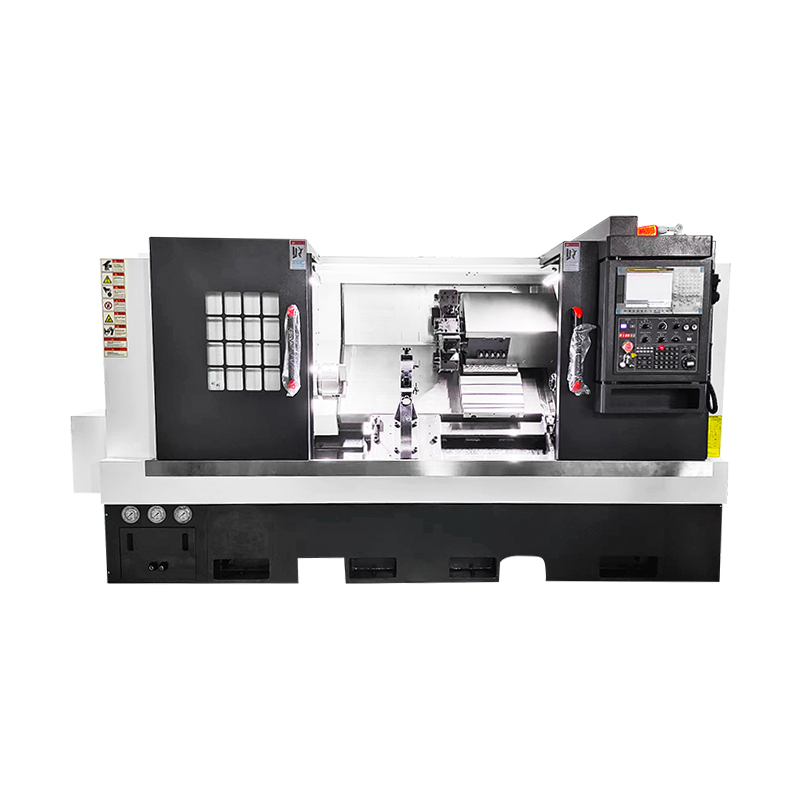
- CNC lathe: Mainly used for processing rotary parts such as shafts, discs, and sleeves, with high processing efficiency and precision, and is the core equipment for customized rotary parts.
- Five-axis linkage CNC machine tool: The top equipment in customized processing, which can realize multi-angle and all-round processing of complex special-shaped parts at one time, avoiding multiple clamping errors, and is specially used for high-precision complex customized parts in aerospace and medical industries.
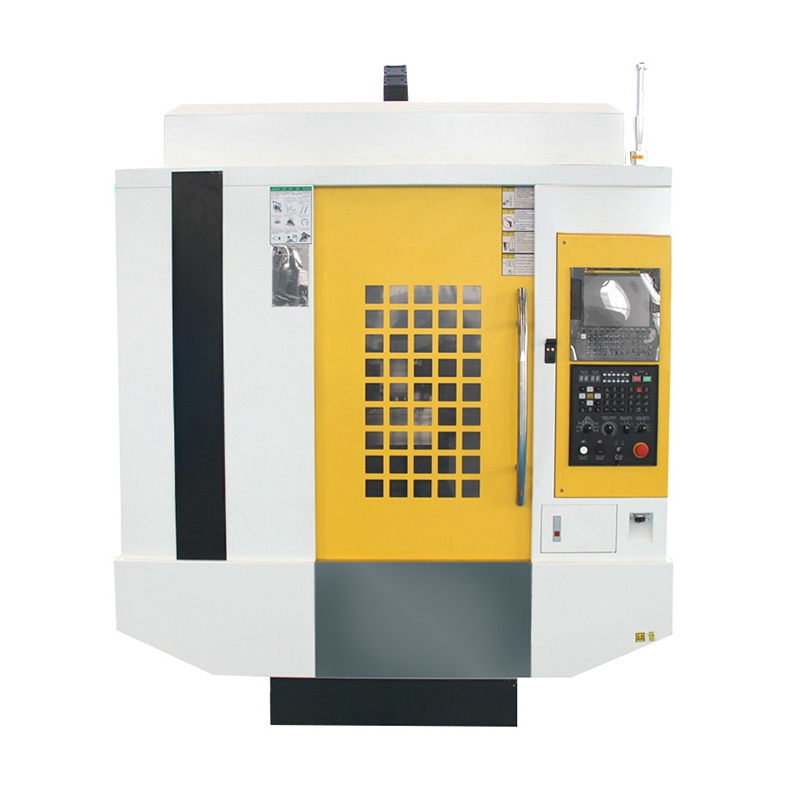
- CNC drilling and tapping machine: Focus on the processing of drilling and tapping of customized parts, with high efficiency and high precision, suitable for parts with a large number of holes and threads.
- CNC grinding machine: Used for ultra-precision finishing of customized parts, further improving the surface roughness and dimensional accuracy of parts, and meeting the high-standard requirements of precision equipment.
Classification of Customized CNC Processing Technologies
According to different processing requirements and part characteristics, customized CNC processing is divided into multiple technical categories, each of which has a clear application scope, ensuring that personalized processing can be carried out efficiently:
- CNC milling customization: The most common category, suitable for non-rotary complex parts, such as structural parts of electronic equipment, fixture shells, etc.
- CNC turning customization: For rotary customized parts, such as motor shafts, valve cores, connecting rods, etc., with high processing efficiency.
- Turn-milling compound customization: Integrates turning and milling functions, and completes all processing of complex rotary parts at one time, reducing clamping times and improving precision.
- Five-axis CNC customization: For ultra-complex three-dimensional structural parts, such as aircraft engine blades, medical implant parts, etc., with irreplaceable advantages.
- Precision grinding customization: For parts with ultra-high surface and precision requirements, such as precision instruments and optical equipment parts.
Complete Process Flow of Customized CNC Processing
Early Stage: Demand Communication and Drawing Confirmation
The first step of customized CNC processing is in-depth demand communication, which is the basis for ensuring that the final parts meet the application needs. The processor needs to confirm the core information with the demander, including part use, material requirements, dimensional accuracy, surface treatment requirements, tolerance range, production quantity, and delivery cycle. On this basis, the 2D or 3D design drawings provided by the demander are reviewed and optimized, and the unreasonable parts in the design are modified in combination with processing feasibility to avoid problems in the processing process.
This stage is crucial; more than 70% of processing quality problems are caused by unclear early demand communication. Only by confirming all details can the subsequent processing be carried out smoothly.
Middle Stage: Program Compilation, Material Preparation, and Processing
After the drawing is confirmed, the professional technician compiles the exclusive CNC processing program. The program includes tool selection, processing path, cutting parameters, spindle speed, feed rate, and other key data, which are optimized according to the part structure and material characteristics to ensure processing efficiency and precision. At the same time, select the raw materials that meet the requirements, carry out cutting and pretreatment, and then install them on the CNC equipment.
The formal processing is carried out automatically by the equipment. During the processing, the technician monitors the operation of the equipment in real time, adjusts the parameters in a timely manner if abnormal conditions occur, and ensures that the processing process is stable. For complex parts, it is necessary to carry out step-by-step processing and intermediate inspection to avoid cumulative errors.
Later Stage: Inspection, Surface Treatment and Delivery
After the processing is completed, the parts are strictly inspected. The inspection items include dimensional accuracy, shape tolerance, surface roughness, thread fit, etc., using professional measuring tools such as calipers, micrometers, and three-coordinate measuring instruments. Only parts that pass all inspection items can enter the surface treatment link, including anodizing, electroplating, spraying, sandblasting, passivation and other processes according to demand, to improve the corrosion resistance, wear resistance, and appearance of the parts.
Finally, the qualified parts are packaged and delivered, and after-sales technical support is provided. The complete process flow ensures that every link of customized CNC processing is controllable, and the quality of the final parts is guaranteed.
Application Fields of Customized CNC Processing
Customized CNC processing has a wide range of applications, covering almost all industrial fields that require non-standard customized parts. Its high precision and strong adaptability make it play an important role in high-end manufacturing and conventional manufacturing. The following are the main application fields and typical application cases:
Aerospace Industry
The aerospace industry has extremely high requirements for part precision, material performance, and structural complexity, and customized CNC processing is the core processing method. It is used to process aircraft engine components, rocket connector parts, satellite structural parts, etc. These parts are mostly made of high-hardness, high-temperature resistant materials, with complex structures and ultra-high precision requirements. Five-axis linkage CNC customized processing can meet the processing needs of 90% of aerospace non-standard parts, ensuring the safety and stability of aerospace equipment.
Medical Device Industry
Medical devices require personalized, high-precision, and sterile parts, such as surgical instruments, implantable medical parts, medical equipment shells, etc. Customized CNC processing can use biocompatible materials such as titanium alloy and medical stainless steel to process parts that fully fit the human body structure, with a smooth surface and no burrs, meeting the medical hygiene standards. The single-piece and small-batch customization mode is also very suitable for the personalized production needs of medical devices.
Automotive Industry
In the automotive industry, customized CNC processing is used for new energy vehicle battery components, engine special parts, automotive modified parts, sensor accessories, etc. With the development of the automotive industry towards intelligence and personalization, the demand for non-standard customized parts is increasing. Customized CNC processing can quickly complete prototype proofing and small-batch production, shortening the R&D and production cycle of automotive products.
Electronic and Communication Equipment
Electronic equipment such as mobile phones, computers, and communication base stations requires a large number of miniaturized and high-precision customized parts, such as heat sinks, connectors, and internal structural parts. Customized CNC processing can process ultra-fine structures with high efficiency, ensuring the electrical performance and assembly accuracy of electronic equipment, and adapting to the rapid iteration cycle of electronic products.
Optical Equipment and Precision Instruments
Optical lenses, precision measuring instruments, laboratory equipment, and other products have extremely high requirements for part dimensional accuracy and surface roughness. Customized CNC precision grinding and milling processing can achieve sub-micron level precision control, ensuring the performance and stability of optical and precision instruments.
Advantages of Customized CNC Processing Compared with Traditional Processing
To highlight the value of customized CNC processing, it can be clearly compared with traditional manual processing, ordinary machine tool processing and mold casting processing. The following table shows the core differences between the two:
| Comparison Items | Customized CNC Processing | Traditional Processing |
|---|---|---|
| Processing Precision | 0.001mm-0.01mm, ultra-high precision | 0.1mm-0.5mm, low precision |
| Customization Ability | Supports arbitrary complex structures and personalized designs | Only simple structures, difficult to customize |
| Production Cycle | Short, no mold making, fast proofing | Long, needs mold making, slow adjustment |
| Batch Adaptability | Suitable for single-piece, small, and medium batches | Only suitable for large standard batches |
| Quality Stability | High, controlled by a digital program, consistent quality | Low, affected by manual operation, large error |
From the comparison, it can be seen that customized CNC processing has absolute advantages in precision, customization, cycle and quality stability. It solves the core pain points of traditional processing that cannot meet personalized and high-precision needs, and becomes the optimal solution for customized parts processing in the modern industry.
Key Factors Affecting the Quality of Customized CNC Processing
Equipment Precision and Performance
The precision and performance of CNC equipment are the basic guarantee of processing quality. High-precision five-axis linkage machine tools, stable spindle systems and accurate transmission mechanisms can ensure that the processing path and dimensional control are in place. The equipment with aging performance and insufficient precision will directly lead to dimensional errors and unqualified parts, so professional customized processing manufacturers will regularly maintain and calibrate the equipment to ensure its performance.
Professionalism of Processing Program
The CNC processing program is the core of the entire processing process. The professional program optimizes the processing path, selects the appropriate cutting parameters and tools, avoids tool collision, over-cutting, and under-cutting, and improves processing efficiency and precision. The program compiled by non-professional technicians is prone to errors, resulting in partial damage and processing failure. The experience and technical level of programming technicians directly affect the quality of customized processing.
Material Selection and Quality
The quality of raw materials directly affects the processing effect and service life of parts. The materials with uniform texture, no impurities and no internal defects are easy to process, and the processed parts have stable performance. If the material has cracks, deformation or mismatched models, it will lead to processing difficulties, part breakage and performance failure. In customized CNC processing, selecting high-quality raw materials that meet the design requirements is one of the key steps to ensure quality.
Operational and Inspection Standards
Standardized operation and strict inspection are the last line of defense to ensure the quality of customized parts. Standardized clamping, real-time monitoring during processing, and comprehensive inspection of finished products can find and solve problems in time. Strict inspection standards can eliminate unqualified products and ensure that the delivered parts fully meet the customer's needs.
Future Development Trend of Customized CNC Processing
With the development of intelligent manufacturing, digitalization, and industrial personalization, customized CNC processing is constantly upgrading and iterating, and its future development trend is clear, which will further improve processing efficiency, precision, and application scope:
Intelligent and Automated Upgrading
Future customized CNC processing will be deeply integrated with artificial intelligence and Internet of Things technology. The CNC equipment will have automatic parameter adjustment, automatic fault detection and automatic compensation functions, reducing manual intervention. The intelligent processing system can automatically optimize the processing program according to the part design drawings, realize one-click processing, and further improve the efficiency and stability of customized processing.
Higher Processing Precision
The precision of customized CNC processing will develop towards the nano-level, meeting the processing needs of ultra-precision parts in emerging fields such as micro-nano devices and quantum equipment. The upgrading of multi-axis linkage technology and precision tools will make complex micro-structure processing more accurate, and expand the application of customized processing in high-end manufacturing.
Integration with 3D Printing Technology
Customized CNC processing and 3D printing will be integrated to form a complementary processing model. 3D printing is used for rapid prototyping of complex structures, and CNC processing is used for precision finishing, combining the advantages of fast prototyping and high precision. This integrated technology will solve the processing problems of more complex personalized parts and shorten the research and development cycle of new products.
Wider Application in Emerging Industries
Emerging industries such as drones, robots, marine engineering, and new energy will generate a large number of personalized part needs, and customized CNC processing will become the core supporting technology. With the expansion of application fields, the technical threshold of customized processing will be further reduced, and small and medium-sized enterprises can also easily carry out customized parts processing, promoting the overall development of the manufacturing industry.
Guidelines for Selecting Customized CNC Processing Services
For customers with customized CNC processing needs, choosing a professional and reliable processing service is the key to ensuring part quality and delivery cycle. The following practical guidelines can help you make the right choice:
- Check the equipment configuration: Give priority to processors equipped with high-precision CNC machine tools and five-axis linkage equipment to ensure the processing capacity of complex and high-precision parts.
- Understand technical strength: Focus on the experience of programming and processing technicians, and select a team with rich experience in customized processing to avoid program errors and operation problems.
- Confirm quality control system: Select processors with complete inspection equipment and strict quality inspection processes to ensure that each part can be inspected and qualified.
- Evaluate service flexibility: Choose processors that support single-piece proofing, small-batch production, and can quickly adjust processing plans to adapt to changes in customized needs.
- Compare cost and cycle: On the premise of ensuring quality, select a processor with a reasonable price and a controllable delivery cycle to balance cost and efficiency.
Following these guidelines, you can find a matching customized CNC processing service, ensure that the customized parts meet the design and application needs, and avoid losses caused by improper selection.
 Previous