 English
 русский
News
Home / News / Industry News / CNC Linear Rails: How to Select, Mount, and Maintain Them for Precision

 English
 Search
Suzhou Heimat Precision Machinery Co., Ltd.
+86-18118122885
joy.qian@szhengmai.com
A CNC linear rail is one of those components that quietly decides how a machine performs. Two machines can share the same frame design, the same ball screw and the same servo motor, yet one holds a tight tolerance all day while the other chatters the moment the cutter bites. Very often, the difference sits in the guideway.
Profile linear rails, also called linear guide rails or linear motion guideways, carry the moving mass of a CNC machine on recirculating balls or rollers. For machine builders, automation integrators and maintenance engineers, they set the practical ceiling on rigidity, repeatability and service life. This article explains how they work, how the main guide systems compare, what to check when specifying a rail, and how the machined parts around the rail shape the final result.
A linear rail is a hardened steel profile with two or four ground raceways running along its length. A carriage, usually called a block, rides on the rail with recirculating balls or rollers travelling inside those raceways. Because the rolling elements are slightly preloaded, the block has almost no free play in any direction.
That point is what separates a profile rail from a plain round shaft and bushing. A profile rail constrains the carriage in four directions at once, up, down, left and right, while a round shaft mainly supports radial load. The rail spreads load across many contact points, so it delivers higher stiffness in the same footprint, less deflection under cutting force, and cleaner reversal behaviour when the axis changes direction.
In practice, rails do more than move a table. They shape the vibration signature of the machine, the stability of the tool tip and, ultimately, the surface finish and dimensional consistency a shop can promise its customers.
Not every axis needs a profile rail, and choosing the wrong guide class is an expensive mistake in either direction. The table below summarises the systems most commonly found on CNC machines and automation equipment.
| Guide system | Load capacity | Rigidity | Speed capability | Typical use |
|---|---|---|---|---|
| Profile rail, ball type | Medium | High | High and smooth | General CNC axes, routers, pick and place |
| Profile rail, roller type | Very high | Very high | Moderate | Heavy milling, gantry axes, machine tools |
| Round shaft with bushing | Low to medium | Moderate | Moderate | Light automation, simple transfer axes |
| Dovetail or box way | High | Very high | Low | Heavy, damped cutting on older machines |
Two observations are worth adding. First, roller rails generally buy load capacity and rigidity at the cost of higher friction and a stricter lubrication regime than ball rails. Second, a lighter guide system is not automatically cheaper to own: if the machine has to slow down to avoid vibration, the savings on the rail disappear in cycle time.
A rail is only as straight as the surface it is bolted to. Engineers who have chased accuracy problems will recognise the usual suspects: a mounting shoulder that is not parallel to the datum, a bed whose flatness drifts along the axis, or bolt holes positioned a fraction of a millimetre away from the drawing.
Good practice is straightforward but demands discipline. Machine the datum shoulder and the mounting face in a single setup so that height and parallelism stay related. Use that shoulder as the reference for both rails of an axis, and verify the parallelism of the rail reference edges before final torque. Tighten bolts in a controlled sequence to a specified torque rather than by feel. When rails run in pairs on a gantry, the height tolerance between the left and right sides matters as much as the individual rail grade.
This is where a partner with machining capacity in house earns its place. Rail mounting plates, gantry brackets, spindle housings and carriage adapters all need pockets, shoulders and hole patterns that hold their tolerances after anodising, hardening or assembly, which is exactly the kind of work we do every week for automation builders.
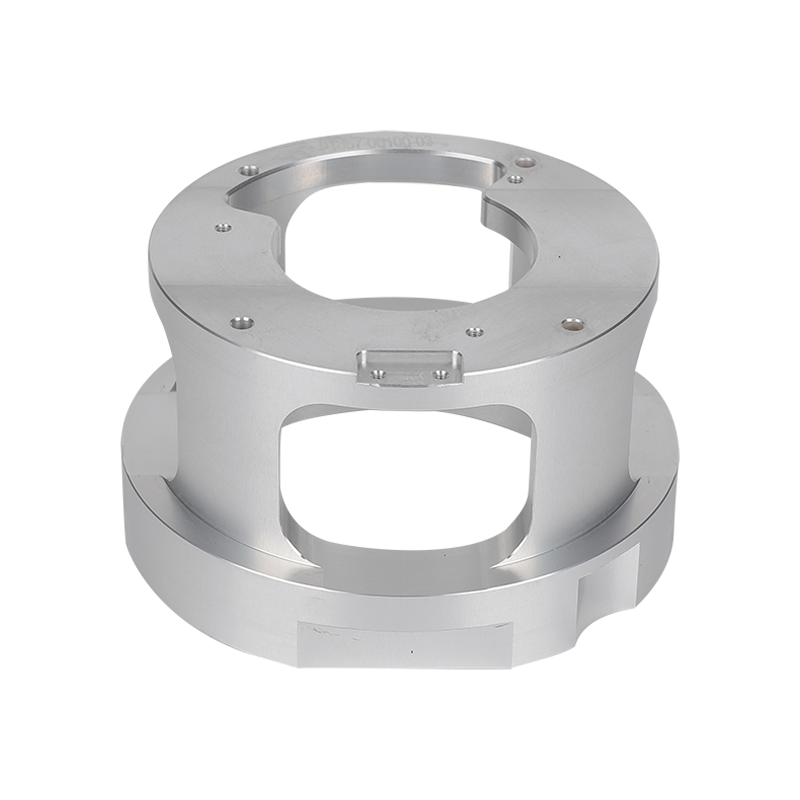 Automation Equipment Customized CNC PartsThis is a mechanical part manufactured through milling processes. Milling is a common metal processing method. It makes parts by removing material from a workpiece to ...View Product →
Profile rails appear wherever an axis must move precisely and repeatedly under load. In automation they carry assembly heads, pick-and-place gantries and robotic arms, often at high speed and with short strokes. In aerospace machining they support axes that hold tight tolerances in aluminium and titanium. Energy equipment uses them in positioning and inspection machinery, medical equipment in scanning and handling stages, and electronics and packaging lines in cutting, forming and placement units.
Each environment asks something different of the same component. A clean room axis worries about lubrication migration, a foundry axis worries about abrasive dust, and a high-speed pick-and-place axis worries about acceleration and settling time. Matching the rail, the carriage and the surrounding structure to the application is what turns a catalogue part number into a reliable axis.
Robotic arms are a good example. A six-axis arm may use linear guideways in its transfer base or in a seventh-axis slide, and both the rail seats and the mating brackets have to hold geometry through continuous reversing motion.
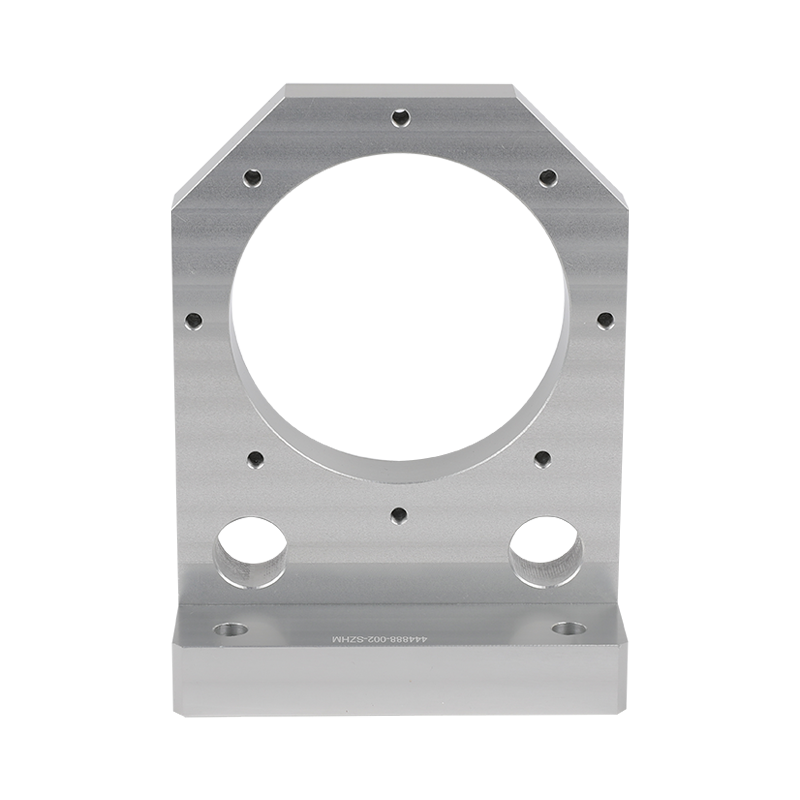 Automated Robotic Arm High-Precision PartsThis is a mechanical part manufactured through milling processes. Milling is a common metal processing method. It makes parts by removing material from a workpiece to ...View Product →
Rail life is usually decided by lubrication and contamination rather than by fatigue. A simple routine keeps most installations healthy:
The rail is a purchased component, but the accuracy of the axis is built around it. That means the supplier you work with should be comfortable with the whole chain: reading a drawing and proposing a manufacturable version, machining seats and shoulders to the required flatness and parallelism, fabricating the frames and covers, and assembling the finished axis or machine.
It also helps when the same team can support the measurement side of the problem. If you want a deeper look at how machine geometry is verified and corrected in production, our article on precision measurement and error compensation on machine tools is a useful companion read, and you are always welcome to talk to our engineering team about a specific axis or assembly.
We build and integrate CNC machines and the precision parts that go into them, which means rail mounting geometry, carriage adapters and structural components are handled under one roof instead of across three suppliers.
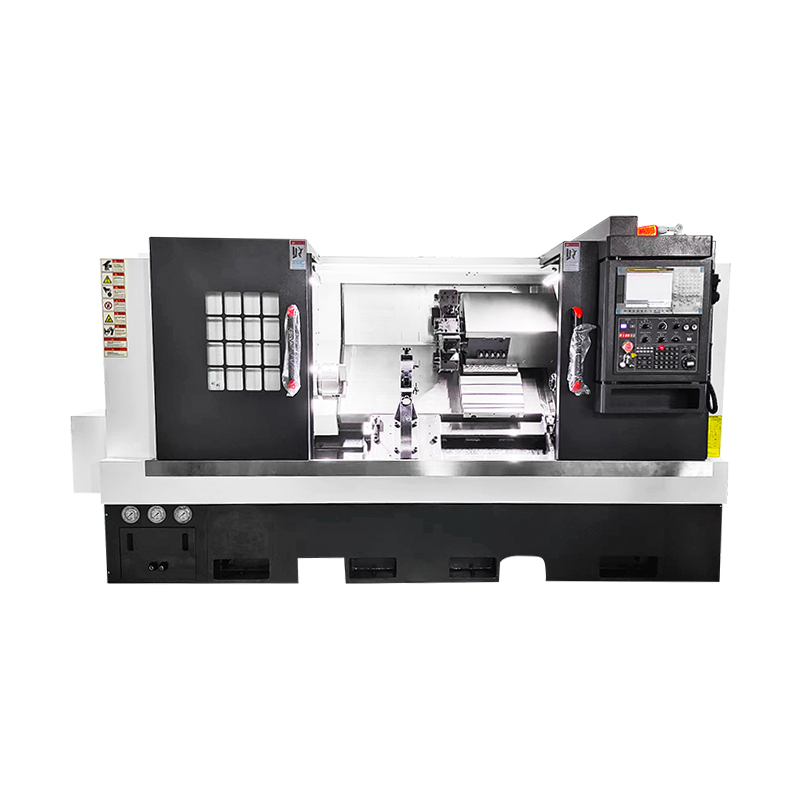
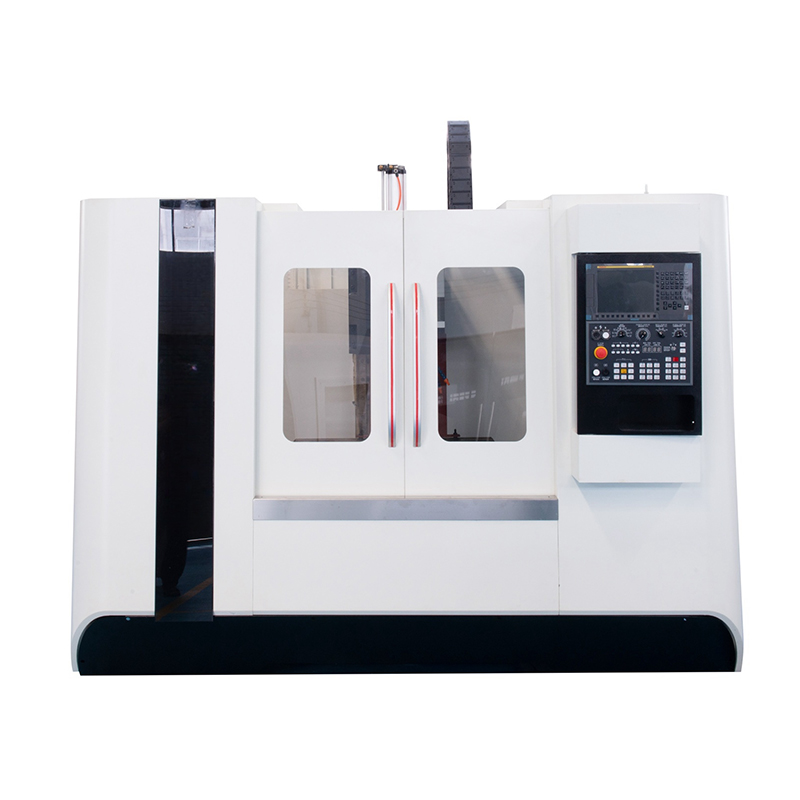 CNC MachineCNC Drilling and Tapping MachinView Product →
A CNC linear rail is a small part of a machine and a large part of its performance. Choose the guide class for the real load and duty cycle, specify preload and accuracy to match the axis rather than the catalogue maximum, and treat the mounting surface with the same seriousness as the rail itself. Do those three things and the guideway will keep doing its quiet job for years.
If you have any questions, please fill out the contact form at the bottom of the page and contact us.
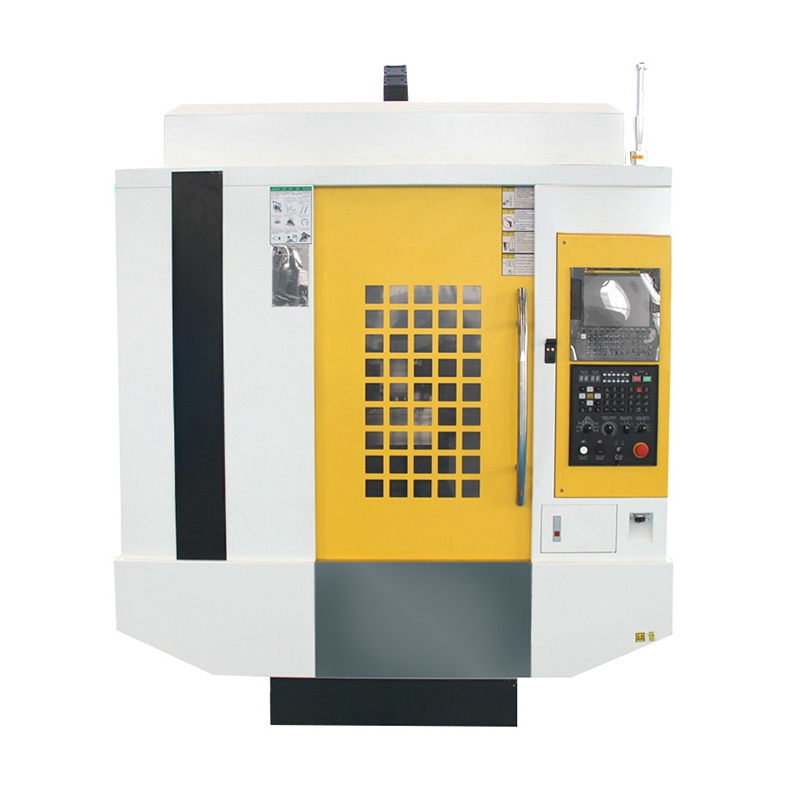 CNC Drilling and Tapping Machin
 CNC Lathe Machine
 CNC Machine
 Cutomized Die-Cutting Products for Electronics Industry
 New Energy Automation Die Cutting Products
 Customeized Die-Cut Products in Package Industry
 Bespoke Touch Screen for Gaming and Entertainment Devices
 Custom Touch Screen in Smart Home Industry
 Customized Personalized Touch Panel Screen
 Design Manufacturing and Assembly of Special Customized Custom Electrical Cabinet
 Industrial Robot Automatic Production Line Design Manufacture and Assembly
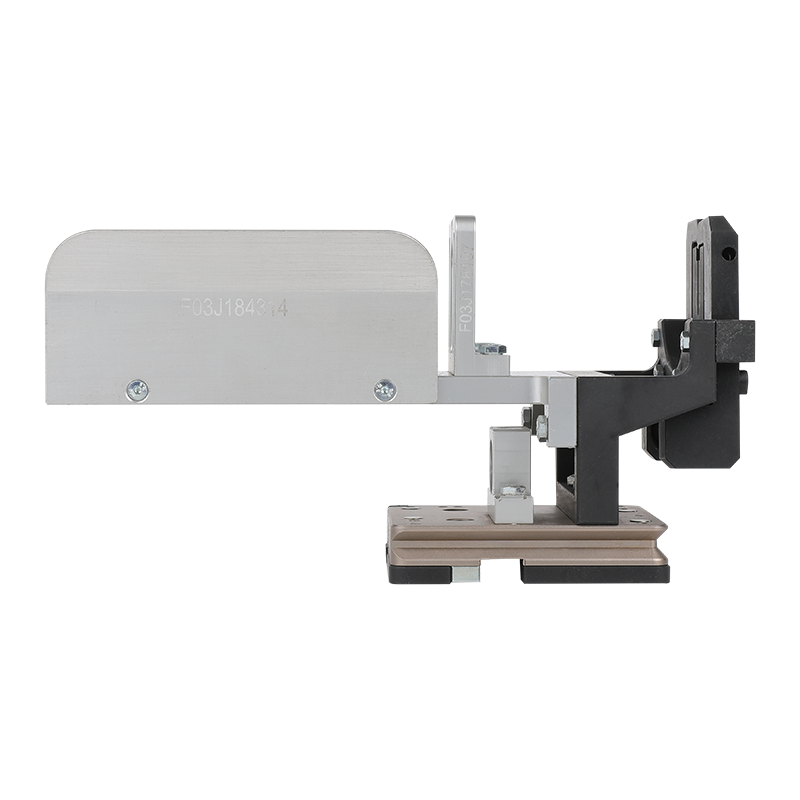 Customized Design Automation Equipment

+86-18118122885

+86-512-66233336

joy.qian@szhengmai.com

No. 8, Guangdian Road, Guangfu Town, Wuzhong District, Suzhou, Jiangsu, China.
Copyright © 2023 Suzhou Heimat Precision Machinery Co., Ltd. All Rights Reserved.Custom CNC Parts Processing Manufacturers

|
