English
 русский
The Strategic Value of CNC Machining
CNC machining services represent the pinnacle of modern manufacturing technology, offering an automated, precise, and versatile solution for producing high-quality parts. By utilizing computer numerical control to remove material from a workpiece, this service ensures exceptional accuracy, complex geometry capabilities, and consistent repeatability that traditional manual machining cannot match. Whether for rapid prototyping or low-to-medium volume production, CNC machining provides the reliability and speed required to meet rigorous industrial standards, making it an indispensable resource for engineers and product developers across various sectors.
Understanding the Precision Capabilities
The fundamental advantage of a CNC machining service lies in its ability to maintain incredibly tight tolerances. Unlike manual processes, which are subject to human error and fatigue, CNC machines follow programmed instructions with unwavering accuracy. This precision is critical for industries where even a microscopic deviation can lead to part failure.
Standard Tolerances and Repeatability
Most professional services guarantee standard tolerances within a specific range, typically around ±0.005 inches (±0.13 mm) for metals and slightly wider for plastics depending on their stability. However, high-precision operations can achieve tolerances as tight as ±0.0001 inches (±0.0025 mm). Furthermore, repeatability is guaranteed across production runs, ensuring that the first part produced is identical to the thousandth, which is vital for interchangeable assemblies.
Automation Reducing Human Error
The automation inherent in these services significantly mitigates risks associated with manual intervention. Once the design is translated into G-code via CAD/CAM software, the machine executes the cuts autonomously. This reduces the likelihood of rough finishes or dimensional inaccuracies caused by operator variability. Advanced probing systems within the machines also allow for in-process adjustments, compensating for tool deflection or thermal expansion in real-time.
Diverse Machining Processes Explained
A comprehensive CNC machining service is not limited to a single type of operation. It encompasses a variety of subtractive manufacturing techniques, each suited for different geometric requirements and part functionalities. Understanding these processes helps in optimizing designs for manufacturability.
CNC Milling
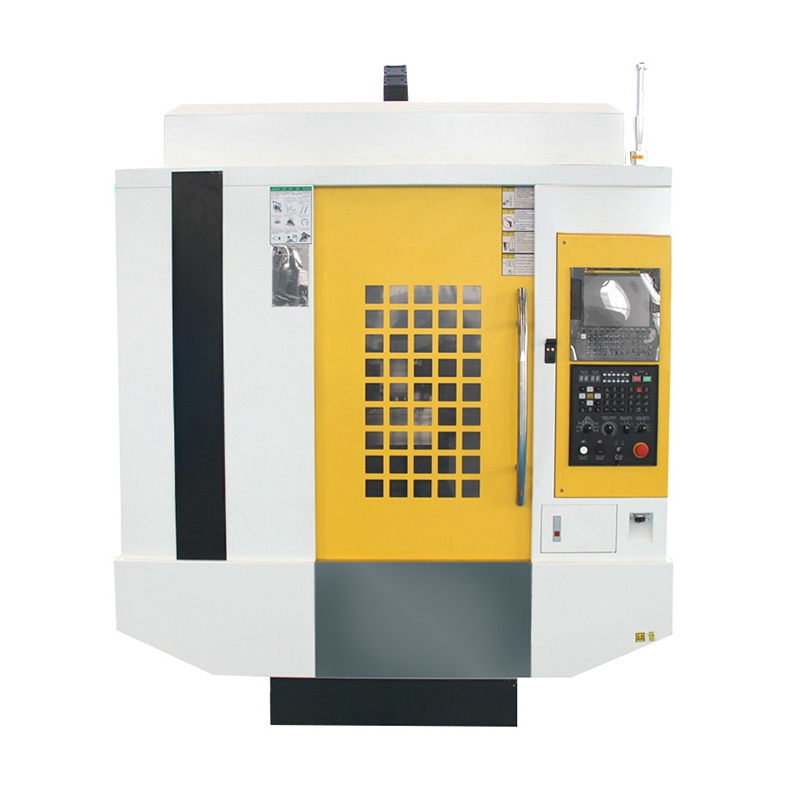
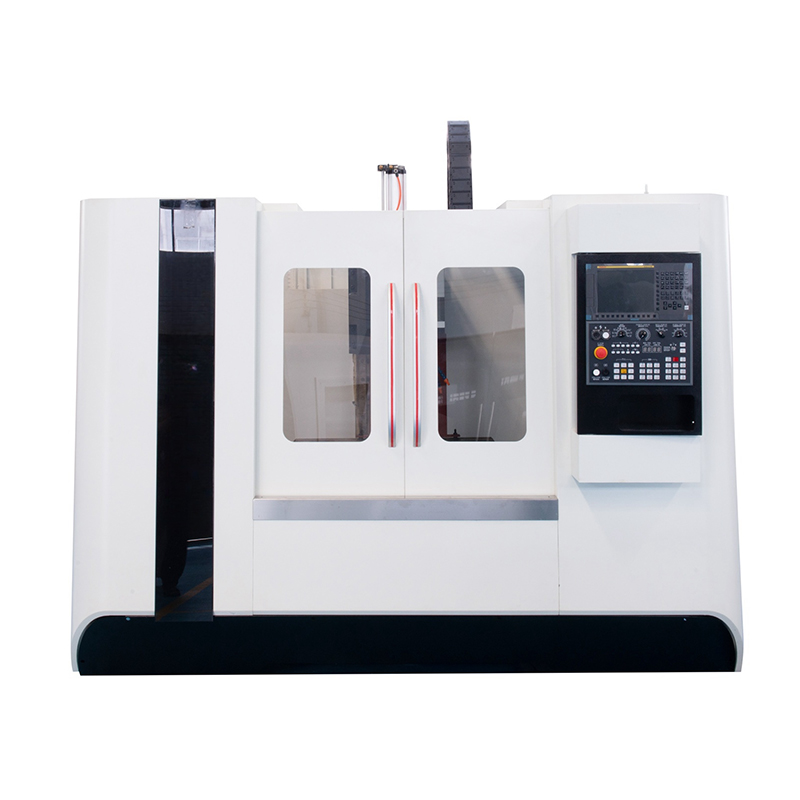
Milling is a process that utilizes rotating cylindrical cutters to remove material from a solid block. It is highly effective for creating parts with complex shapes, slots, holes, and three-dimensional surface contours. Modern milling centers often feature multiple axes—typically 3, 4, or 5 axes. While 3-axis milling moves the cutting tool along the X, Y, and Z axes, 5-axis milling allows the table and tool to rotate, enabling the machining of intricate undercuts and angles in a single setup.
CNC Turning
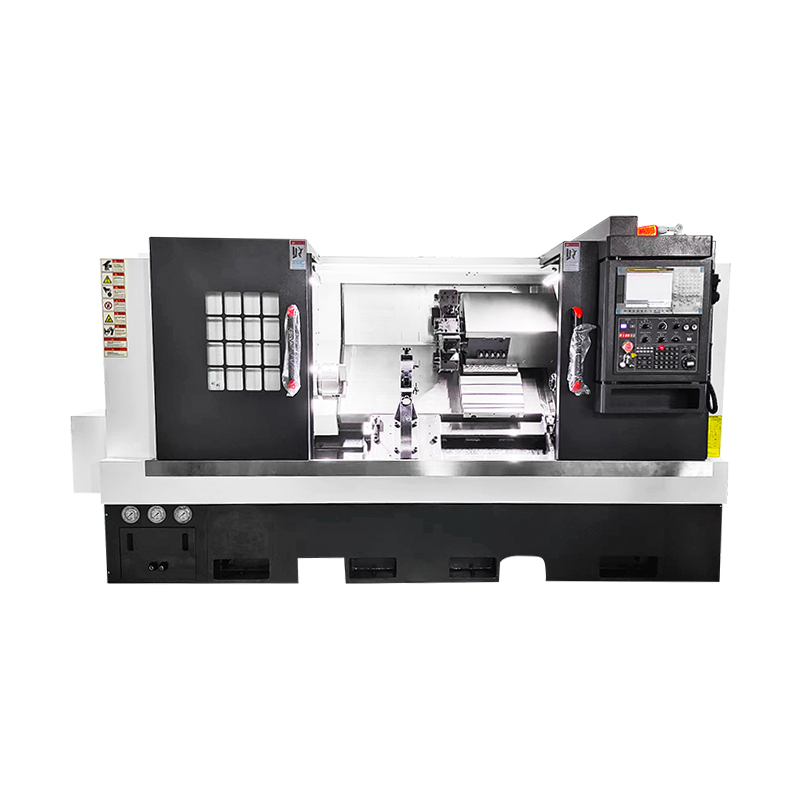
Also known as lathe machining, turning involves rotating the workpiece against a stationary cutting tool. This process is primarily used for creating cylindrical or conical shapes. It is ideal for producing shafts, bolts, and fittings. Turning centers can also incorporate live tooling, which allows for milling operations to be performed while the part is rotating, creating off-center features with high precision.
| Feature | CNC Milling | CNC Turning |
|---|---|---|
| Primary Motion | Rotating Tool | Rotating Workpiece |
| Best Geometry | Complex 3D, Prismatic | Cylindrical, Symmetrical |
| Cost Efficiency | Higher for complex parts | High for volume cylindrical parts |
Material Selection and Compatibility
One of the strongest assets of a CNC machining service is its compatibility with a vast array of materials. Unlike additive manufacturing or molding, which may be restricted by specific material properties like melting point or flow rate, CNC can machine virtually any machinable material. This allows engineers to select materials based strictly on performance requirements such as strength, weight, corrosion resistance, and thermal stability.
Engineering Metals
Metals are the most commonly machined materials due to their structural integrity. Aluminum alloys (such as 6061 and 7075) are favored for their excellent strength-to-weight ratio and ease of machining. Stainless steels (like 303 and 304) provide superior corrosion resistance and strength, making them suitable for medical and food-grade applications. Titanium alloys are machined for aerospace and biomedical implants because of their high strength and biocompatibility, although they are more challenging to cut and require specialized tooling.
Industrial Plastics
Plastics offer distinct advantages in terms of weight reduction and chemical resistance. Common machined plastics include ABS, which is tough and cost-effective; Acetal (POM), known for its low friction and high dimensional stability; and PEEK, a high-performance plastic that offers exceptional thermal and chemical resistance, often used as a metal substitute in demanding environments. Machining plastics requires careful control of speeds and feeds to prevent melting or warping during the cutting process.
Efficiency from Prototyping to Production
CNC machining services uniquely bridge the gap between prototyping and end-use production. This scalability is a crucial factor for product developers who need to validate designs quickly before committing to high-volume manufacturing methods like injection molding.
Rapid Prototyping Advantages
For prototypes, CNC machining offers fast turnaround times without the need for expensive tooling or molds. Design iterations can be tested by simply modifying the digital file. This allows for functional testing using actual production materials, providing data that is far more accurate than what simulation software or 3D printed plastic prototypes can offer. Engineers can verify fit, form, and function under real-world conditions immediately.
Low-to-Medium Volume Manufacturing
Once a design is validated, the same CNC machines used for prototyping can transition to producing production-grade parts. For runs ranging from a single piece to several thousand units, CNC machining is often more economical than creating hard tooling. It provides a reliable supply chain solution that maintains quality assurance throughout the lifecycle of the product. Furthermore, custom fixtures can be developed to automate loading and unloading, increasing throughput for medium-volume orders.
Surface Finishes and Post-Processing
The raw part coming off the machine often requires further treatment to meet specific aesthetic or functional standards. A complete CNC machining service typically includes a variety of post-processing options to enhance the surface properties of the part.
- As-Machined: This leaves the part with visible tool marks and a standard surface finish (Ra 3.2 µm / 126 µin). It is cost-effective and ideal for non-cosmetic functional parts.
- Bead Blasting: This process uses fine glass beads to create a uniform, matte texture on the part surface. It removes tool marks and provides a consistent look while hiding minor surface imperfections.
- Anodizing: Specifically for aluminum and titanium, anodizing increases corrosion resistance and allows for color dyeing. Type II anodizing is standard for cosmetic parts, while Type III (Hard Anodizing) adds a thick, wear-resistant layer.
- Polishing: Mechanical or chemical polishing creates a mirror-like finish, often required for optical components or decorative parts where reflectivity is desired.
- Powder Coating: A dry finish process where electrostatically charged powder is applied and cured under heat. It provides a durable, wear-resistant finish that is thicker and tougher than standard paint.
Cost Drivers and Optimization
Understanding the factors that influence the cost of CNC machining services enables better design decisions that can save significant budget without sacrificing quality. While the process is efficient, costs can escalate based on part complexity and machine run time.
Design for Manufacturability (DFM)
Optimizing a design for CNC machining is essential for cost reduction. Complex features such as deep cavities, thin walls, or internal undercuts require specialized tools, slower machining speeds, and multiple setups, all of which increase cost. By simplifying geometries where possible—for example, reducing the depth-to-width ratio of pockets or standardizing hole sizes—manufacturers can significantly reduce machining time.
Material and Setup Costs
The choice of material directly impacts the price; exotic alloys and engineering plastics are more expensive than standard aluminum or mild steel. Additionally, the setup time—where the machine is calibrated and fixtures are installed—constitutes a fixed cost per order. To minimize the impact of setup costs, it is often more economical to order larger quantities of parts in a single run rather than multiple small runs of the same part. Reducing the number of machine setups required for a part is one of the most effective ways to lower the overall unit price.
Applications Across Industries
The versatility of CNC machining services makes them a cornerstone of manufacturing across a broad spectrum of industries. The technology's ability to produce parts with high strength, precision, and material variety ensures its continued relevance.
- Aerospace: Manufacturing engine components, structural airframe parts, and complex manifolds that require lightweight materials like titanium and high-strength alloys with extreme precision.
- Automotive: Producing transmission housings, engine blocks, and custom aftermarket performance parts where durability and dimensional accuracy are non-negotiable.
- Medical: Creating surgical instruments, orthopedic implants, and housings for medical devices that must meet strict biocompatibility and sterilization standards.
- Electronics: Machining heat sinks, enclosures, and radio-frequency (RF) components requiring precise geometries to manage heat and electrical signals effectively.
- Robotics: Fabricating custom gears, joints, and structural frames for robotic arms and automation systems, ensuring smooth operation and high load-bearing capacity.
In conclusion, CNC machining services offer a robust, precise, and flexible manufacturing pathway that is essential for modern product development. By leveraging advanced automation, a wide range of material choices, and expert finishing techniques, these services enable the creation of parts that meet the exacting demands of today's industrial landscape.