English
 русский
News
A professional CNC parts factory is the core supplier of precision-machined components for industrial manufacturing, providing fully customized CNC machining services from material selection, design optimization, programming, processing, and quality inspection. The core value of such factories lies in stably producing high-precision, high-consistency CNC parts that meet industrial application standards, with a precision tolerance control capability reaching ±0.005mm or higher, and supporting mass production, small-batch customized production, and prototype trial production simultaneously.
Unlike ordinary processing workshops, formal CNC parts factories are equipped with complete CNC machining equipment, professional technical teams, standardized production processes, and perfect quality management systems. They can meet the performance, dimensional accuracy, surface treatment, and delivery cycle requirements of parts in industries such as automation, medical, aerospace, automotive, and electronic equipment. This is the essential definition and core output of a qualified CNC parts factory, and also the primary basis for selecting cooperative suppliers.
Core Equipment Composition of a CNC Parts Factory
The equipment configuration of a CNC parts factory directly determines its processing capacity, product scope, precision level, and production efficiency. Mature factories are equipped with multi-category, multi-specification CNC machine tools and supporting auxiliary equipment to cover all processing links of parts.
CNC Milling Machines
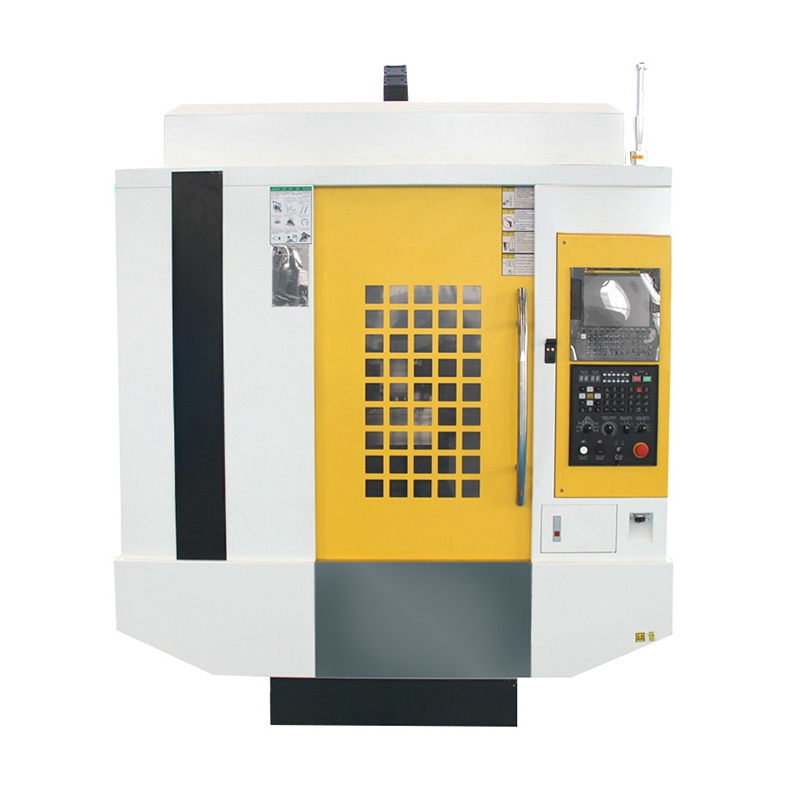
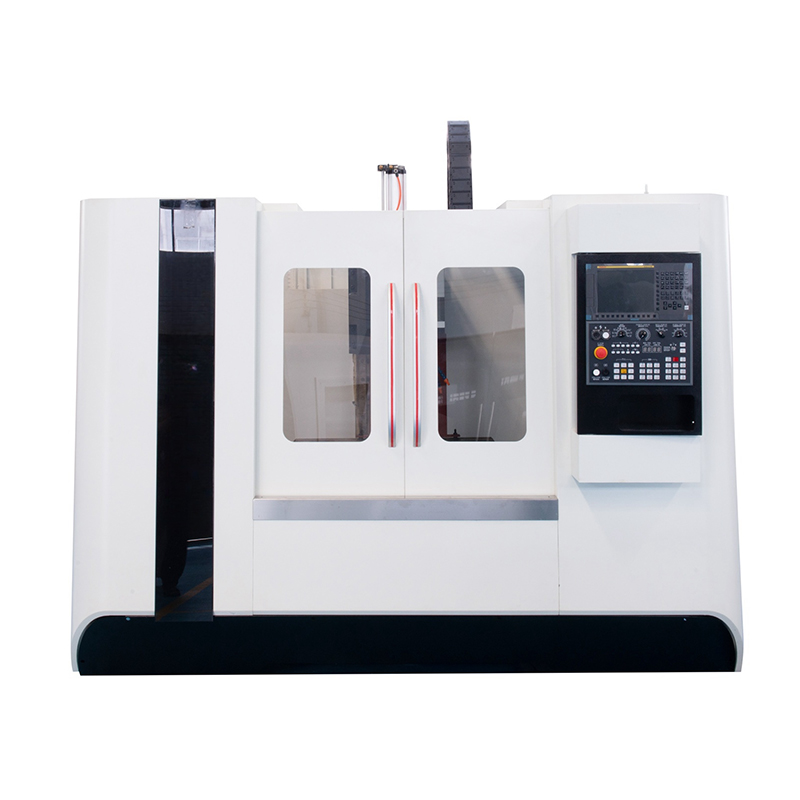
CNC milling machines are the most widely used equipment in parts factories, mainly used for processing planes, grooves, contours, holes, and complex three-dimensional structures of parts. They are divided into three-axis, four-axis, and five-axis milling machines. Among them, five-axis linkage machining centers can complete one-time clamping and processing of complex, special-shaped parts, which greatly improves processing accuracy and efficiency, and is suitable for high-difficulty parts in aerospace and medical industries.
CNC Lathes
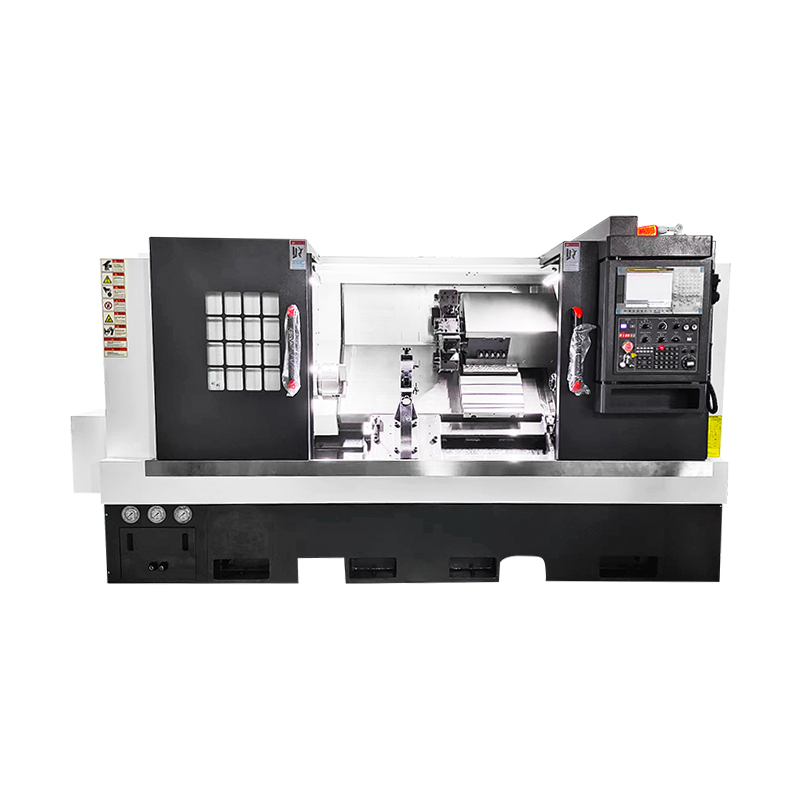
CNC lathes are used for processing rotary parts such as shafts, disks, and sleeves, with high processing efficiency and high dimensional accuracy. Swiss-type CNC lathes are specially used for processing small and ultra-long precision shaft parts, with a tolerance control accuracy of up to ±0.002mm, which is widely used in precision instruments and medical device parts.
Auxiliary Processing and Testing Equipment
In addition to core processing equipment, a complete CNC parts factory is also equipped with surface treatment equipment, wire cutting machines, grinding machines, drilling machines, and precision testing instruments such as coordinate measuring machines (CMM), height gauges, and roughness meters. This equipment ensures that parts can complete full-process processing and full-dimensional inspection in the factory, avoiding quality problems caused by external processing.
| Equipment Type | Processing Object | Precision Range |
|---|---|---|
| 3/4/5 Axis Milling Machine | Complex Solid Parts | ±0.005mm – ±0.01mm |
| CNC Lathe | Rotary Parts | ±0.003mm – ±0.01mm |
| Coordinate Measuring Machine | Dimensional Inspection | ±0.001mm |
Materials Processed by CNC Parts Factory
CNC parts factories can process most metal and partial non-metal materials, and select appropriate materials according to the use environment, stress conditions, corrosion resistance, and appearance requirements of parts. Material selection is one of the key steps to ensure the performance and service life of parts.
Metal Materials
- Aluminum alloy: lightweight, good thermal conductivity, easy to process, widely used in electronic equipment, automation equipment, and structural parts, accounting for more than 40% of CNC parts processing volume.
- Stainless steel: high strength, corrosion resistance, used in medical equipment, food machinery, marine parts, and outdoor equipment.
- Carbon steel and alloy steel: high hardness and wear resistance, used in transmission parts, molds, and mechanical structural parts bearing large loads.
- Copper and brass: good electrical and thermal conductivity, used in connectors, electrodes, heat dissipation components, and electrical parts.
Non-Metal Materials
Common non-metal materials include POM, PE, nylon, PTFE, bakelite, acrylic, etc. These materials have the characteristics of insulation, wear resistance, and corrosion resistance, and are widely used in electrical insulation parts, wear pads, mechanical seals, and appearance components. CNC parts factories can formulate special processing parameters according to the characteristics of non-metal materials to avoid material deformation, cracking, or burrs.
In actual production, the factory will provide material selection suggestions based on customer drawings and application scenarios, including material performance comparison, processing difficulty evaluation, and cost control, to help customers balance quality, cycle, and cost.
Standardized Production Process of CNC Parts Factory
A formal CNC parts factory adopts a standardized and process-oriented production model to ensure that each batch of parts has stable quality and consistent dimensions. The complete production process includes multiple links from customer demand to final delivery, and each link has clear operating standards and quality control points.
Demand Evaluation & Drawing Optimization
The factory first evaluates the customer's drawings, including dimensional accuracy, processing difficulty, material selection, surface requirements, and delivery cycle. For unreasonable structures that affect processing or increase costs, the technical team will put forward optimization suggestions to improve processing efficiency while ensuring performance and reducing the risk of defective products.
CNC Programming & Fixture Design
Professional programmers use professional software to compile CNC machining programs, select tools, set processing parameters, and simulate processing paths to avoid collisions and over-cutting. Fixture designers develop special fixtures according to part characteristics to ensure stable clamping and high positioning accuracy during processing, which is especially important for mass production.
Machining & Semi-Finished Inspection
Operators process according to programs and fixtures, and conduct real-time monitoring during production. Semi-finished products will undergo preliminary dimensional inspection to adjust processing parameters in a timely manner and reduce cumulative errors. For high-precision parts, online inspection tools are used for real-time compensation to ensure dimensional stability.
Surface Treatment & Finished Inspection
Common surface treatments include anodizing, sandblasting, electroplating, passivation, spraying, etc., which can improve the corrosion resistance, wear resistance, and appearance of parts. After surface treatment, the factory conducts full inspection or sampling inspection on finished products, including dimensional accuracy, surface roughness, hardness, and appearance, and issues inspection reports. Only parts that pass all inspections can be packaged and delivered.
Packaging & Delivery
Precision CNC parts need anti-collision, anti-pressure, and anti-rust packaging to avoid damage during transportation. The factory will choose appropriate packaging materials according to part size and quantity, and deliver them according to the agreed cycle. For long-term cooperative customers, the factory can also provide inventory management and scheduled distribution services.
Quality Control System of CNC Parts Factory
Quality control is the core competitiveness of a CNC parts factory. High-quality factories establish a full-process quality management system covering incoming inspection, process inspection, finished product inspection, and after-sales tracking, and implement full-staff, whole-process, and all-round quality control.
Incoming Material Inspection
Before production, the factory inspects the specifications, materials, hardness, and appearance of raw materials to prevent unqualified materials from entering the processing link. For metal materials, material certification and chemical composition reports are reviewed to ensure that the materials meet the drawing requirements.
In-Process Quality Control
In the processing process, inspectors conduct regular inspections and random inspections to record key dimensional data. For mass-produced parts, the first article inspection is required, and mass production can only be carried out after the first article is qualified. This link can effectively control the defective rate within 0.5% or lower.
Finished Product Comprehensive Inspection
Finished products need to pass a full set of inspections, including all dimensions marked on the drawing, surface roughness, verticality, flatness, coaxiality and other geometric tolerances, surface treatment effect, and appearance quality. High-precision parts are tested by coordinate measuring machines to ensure that all indicators meet the standards.
Quality Certification & Traceability
Formal CNC parts factories often pass ISO9001 quality management system certification, and some factories that serve medical and aerospace industries also have ISO13485 and other industry-specific certifications. All production and inspection data are recorded and filed to achieve full-process traceability of parts, which is convenient for after-sales processing and continuous improvement of production processes.
Application Industries of CNC Parts Factory Products
CNC parts are basic components of modern industry, and CNC parts factories provide customized processing services for multiple industries. The parts produced have high precision and strong stability, and can adapt to extreme environments such as high temperature, high pressure, corrosion, and high speed.
Automation & Mechanical Equipment
This is the largest application field of CNC parts, including automation line components, manipulator parts, transmission shafts, flanges, fixtures, molds, etc. These parts require high-dimensional consistency and wear resistance to ensure the stable operation of the equipment.
Medical Device Industry
Medical CNC parts have extremely high precision and hygiene requirements, such as surgical instrument parts, endoscopic components, implant accessories, etc. The factory needs to use medical-grade materials and strictly control cleaning and surface treatment to meet medical industry standards.
Aerospace & Aviation
Aerospace parts have strict requirements on material strength, weight, and precision, and most of them are complex special-shaped structures. CNC parts factories use five-axis machining centers to process such parts, with a precision tolerance of up to ±0.002mm, and must meet aerospace industry quality standards.
Automotive & New Energy
Automotive CNC parts include engine components, chassis parts, new energy battery components, charging gun parts, etc., requiring mass production stability and high safety performance. The factory adopts automated production lines to achieve high efficiency and low-cost mass processing.
Electronics & Communication Equipment
Electronic CNC parts mainly include heat sinks, connectors, chassis shells, communication equipment components, etc., mostly made of aluminum alloy and copper materials, focusing on thermal conductivity, electrical conductivity, and appearance quality.
How to Choose a Suitable CNC Parts Factory
Choosing a reliable CNC parts factory is crucial to ensuring part quality, delivery cycle, and cost control. Customers can evaluate and screen from the following core dimensions to find the most suitable cooperative supplier.
Evaluate Processing Capacity & Equipment Level
First, confirm whether the factory's equipment matches the part type: complex three-dimensional parts need five-axis machining centers, small precision shaft parts need Swiss-type lathes. At the same time, check the factory's precision control capacity, and priority should be given to factories with precision up to ±0.005mm or higher.
Check Quality Management System
A qualified factory must have a complete quality control process and relevant certification. Customers can require the factory to provide quality inspection reports, certification documents, and sample parts for testing to verify its quality control level.
Confirm Production & Delivery Capacity
For mass-produced parts, confirm the factory's production scale and delivery cycle; for small-batch customized parts, confirm whether the factory accepts prototype orders and the trial production cycle. Mature factories can meet both mass production and rapid prototype trial production needs.
Evaluate Technical Support & Service
Professional CNC parts factories have independent technical teams that can provide drawing optimization, material selection, processing plan suggestions, and after-sales technical support. Good service can reduce communication costs and solve problems in a timely manner during the production process.
Comprehensive Cost-Effectiveness Evaluation
Cost should not be the only selection criterion. Customers should comprehensively consider quality, cycle, precision, and service to choose a factory with high cost-performance ratio. Excessively low prices often mean unstable quality and potential risks of delayed delivery.
Development Trends of CNC Parts Factory
With the development of intelligent manufacturing and industrial automation, CNC parts factories are moving towards high precision, intelligence, automation, and green production, and the industry's technical level and production efficiency are constantly improving.
Higher Precision & Complexity Processing
The demand for high-precision parts in aerospace, medical, semiconductor and other industries is increasing, promoting CNC parts factories to upgrade equipment and technology, and the processing precision will be further improved to meet the needs of ultra-precision parts.
Intelligent & Automated Production
More and more factories adopt automated production lines, robotic arms, and intelligent processing systems to realize automatic loading and unloading, tool change, and inspection, which greatly improves production efficiency, reduces labor costs, and improves the consistency of parts.
Digital Management & Customized Services
Factories use digital systems to manage production, quality, and logistics, realizing real-time data monitoring and traceability. At the same time, personalized customized services will become the core advantage of factories, meeting the diversified processing needs of different industries and different customers.
Green & Environmentally Friendly Production
CNC parts factories will pay more attention to environmental protection, using environmentally friendly cutting fluids, recycling waste materials, optimizing processing parameters to reduce energy consumption, and realizing green and sustainable production.
 Previous